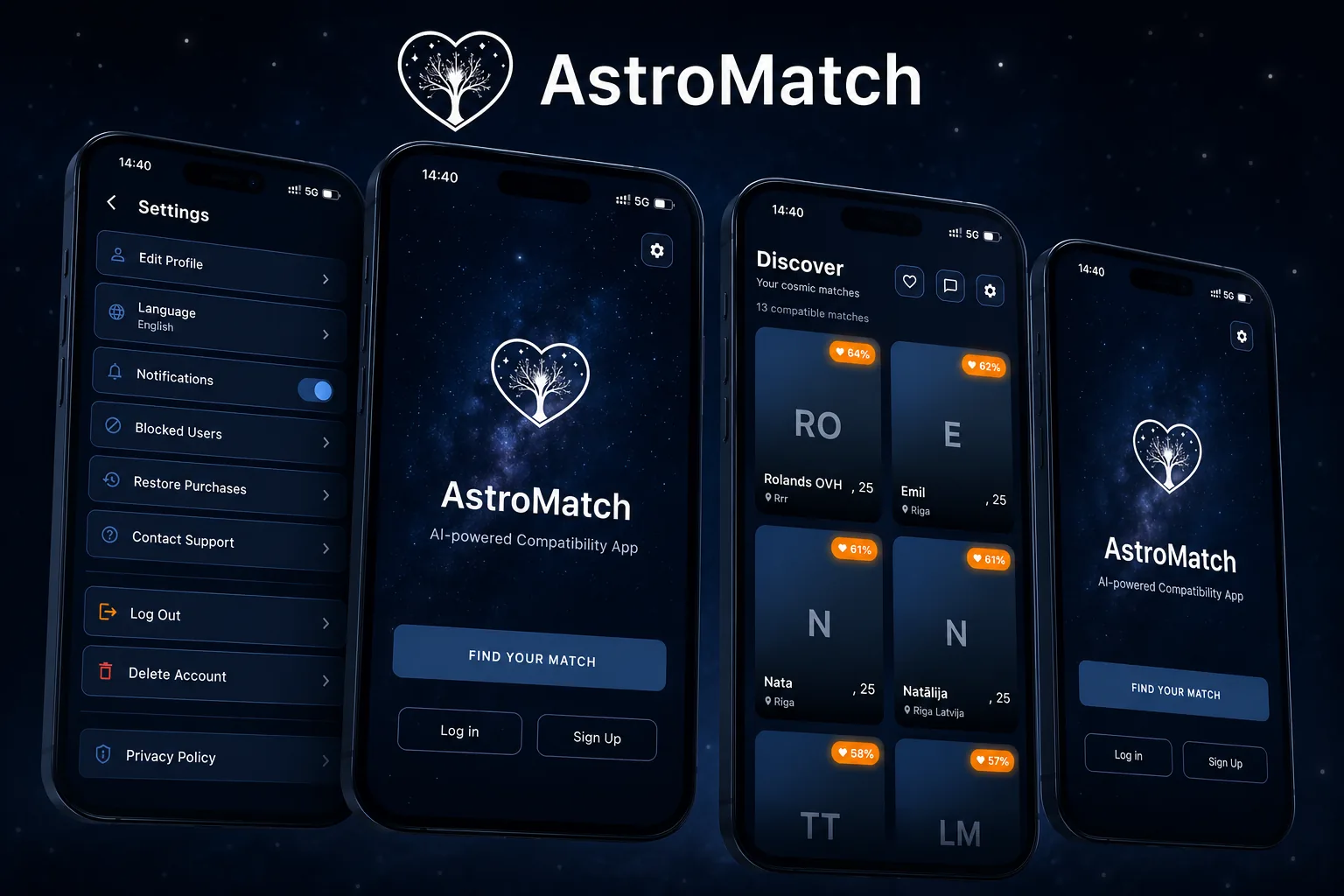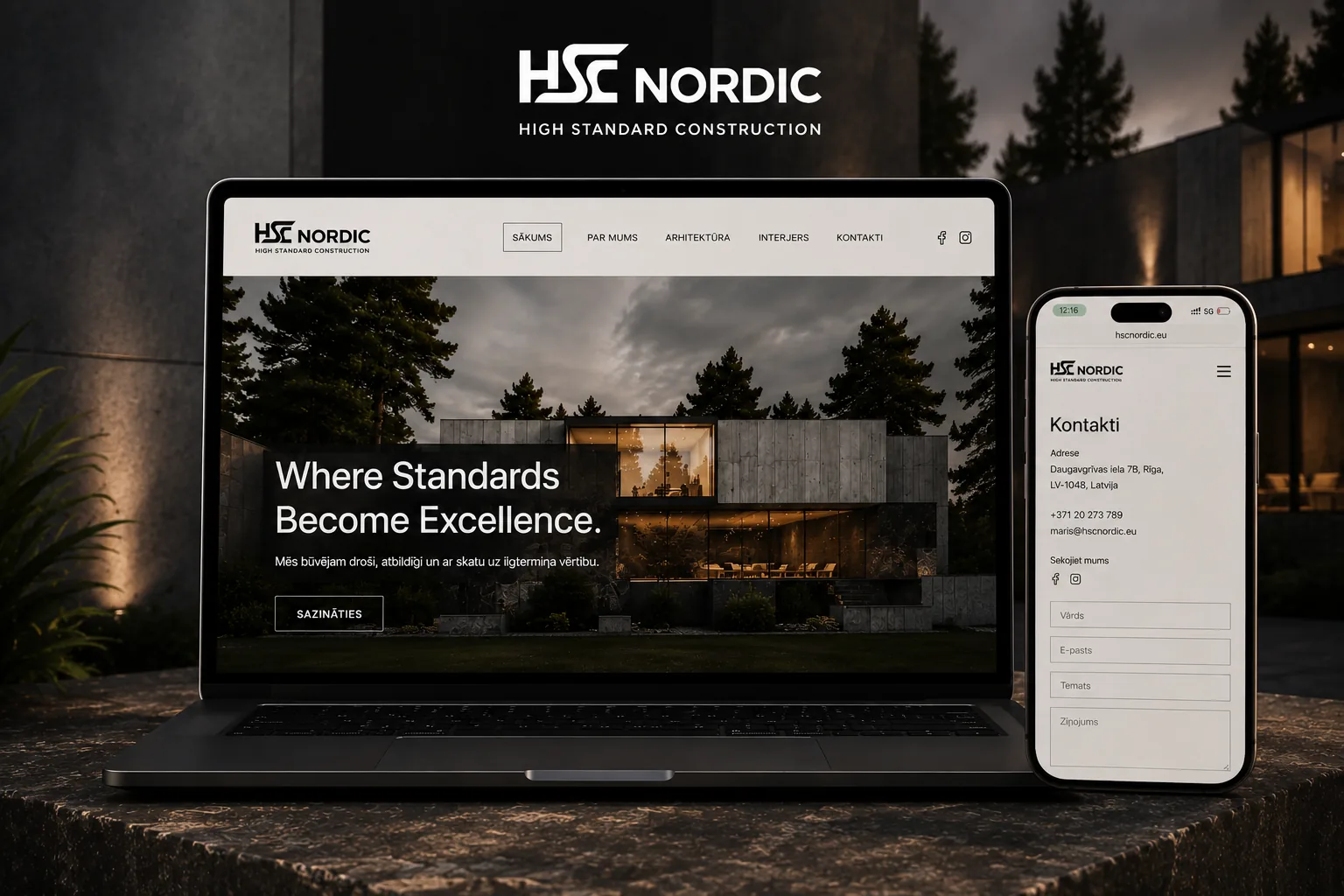
Website
HSC Nordic
Būvniecības uzņēmuma mājaslapa ar 75 arhitektūras un interjera projektiem, individuālu pārvaldības vidi un automātisku a…

When spreadsheets and off-the-shelf tools can no longer handle your workflow, a custom web application brings your data and processes together in one place.
As a business grows, relying on spreadsheets or disconnected off-the-shelf software often slows down daily operations and leads to errors. Information gets lost in email threads, data is manually copied between tables, and clients lack a convenient self-service portal for orders or documents. Custom web application development helps by building a tool that fits how you actually work.
A custom web app runs in the browser and is accessible from any desktop, tablet, or phone, and it can be paired with a mobile app for iOS and Android if needed. It can serve as internal custom software for employees, a secure client portal, or a booking system. At KVANTS, you work directly with the people building it — our developer handles technical architecture and backend logic, while our designer leads interface design.
If your main goal is simply connecting two existing platforms or automating simple routine tasks, Business process automation is a better fit. For connecting accounting software there is Accounting integration, and AI chatbots handle automated customer messaging. A custom web app is the right choice when you need a dedicated software product.
More about the specific platforms and solutions we work with.
Businesses usually start with off-the-shelf tools, spreadsheets, email, and basic accounting programs. As client numbers and team size increase, this setup often causes mistakes. Manual data entry wastes valuable time, and management loses oversight of daily operations.
We design custom software around your existing workflows rather than forcing you to adapt to rigid third-party software. It helps structure data, calculate key metrics automatically, and ensure each team member sees only the information needed for their role.
A custom web application can adapt to very different operational models. Here are common examples:
A secure portal where clients can view orders, download invoices, request services, and track project status independently.
A web app for scheduling services, room rentals, or equipment usage. It prevents double bookings and can be connected to calendars and payments.
Custom software for task management or CRM needs. It helps your team process incoming leads, manage projects, and meet deadlines.
Analytics dashboards that consolidate data from multiple sources in real time, presenting clear business metrics.
Dedicated access for trade partners to view specific pricing, stock levels, and place wholesale orders directly.
If people use the tool every day, or you need push notifications or access to the phone's camera and location, a mobile app may be the better fit. Often both work together: a web application or admin panel for your team and a mobile app for customers, sharing the same data. Read how we build apps for iOS and Android on the Mobile app development page.
Building custom software is not always necessary. If a standard cloud service meets all your requirements at a reasonable monthly fee, using it is more cost-effective. If custom web app development will not yield a return, we say so directly and recommend off-the-shelf alternatives.
Custom development is necessary when off-the-shelf software forces too many compromises, charges high per-user monthly licences, or cannot support your unique business logic and security requirements.
Developing a complex web application all at once increases technical risks and delays delivery. We divide the work into clear stages, starting with a user workflow description and an interactive prototype. This allows you to test the interface before any code is written.
We then build a functional Minimum Viable Product (MVP) containing core features. Once your team starts using the app in real operations, we add improvements and extra features based on real user feedback.
We design security into the application architecture from day one. Role-based access control ensures clients see only their own data, employees see assigned tasks, and administrators manage the entire system.
Passwords are never stored in plain text—only secure hashes are used. All connections use HTTPS, and two-factor authentication can be enabled for sensitive areas. We align data processing with GDPR principles, storing only necessary personal data.
Code ownership and handover terms are agreed in the contract before development begins. We prepare technical documentation for every project and store code on a private KVANTS Git server for full version control.
For hosting, we offer KVANTS managed servers with 24/7 monitoring. You can see service status at status.kvants.lv, and the client portal shows your projects, monitoring and change history.
Custom database architecture design
User authentication and role-based access control
Custom interface design responsive on mobile devices
API integration with third-party services
Real-time notifications and features when required
Data migration from existing spreadsheets or legacy systems
Technical documentation and user guides
Code repository management in a Git version control system
Cross-device and cross-browser testing
Mobile app for iOS and Android when needed
Development, design, hosting, email, maintenance — all in one place. No need to coordinate multiple vendors.
Client projects run on our servers with 24/7 monitoring. We catch issues before your visitors do.
A development plan before work starts and a fixed project price. No upfront payment for small jobs.
You talk directly to the developer, not a project manager. Faster decisions, fewer misunderstandings.
We discuss your needs, review existing processes, and prepare a written proposal within one business day.
We create visual wireframes and interactive prototypes to confirm the layout and user logic before coding starts.
We build a working MVP featuring essential functions, allowing your team to test the app in active operation.
We add remaining features, perform API integration with external tools, and complete thorough system testing.
We deploy the application to production servers, hand over user instructions, and enable monitoring.
Depending on project complexity, development usually takes between 4 and 12 weeks. We specify exact timelines in our written work plan before starting.
All data entered into the system belongs to you. Code ownership and transfer terms are defined in our contract before work begins. We prepare technical documentation for every project.
Yes, we recommend launching a Minimum Viable Product (MVP) with core functionality. This gets the system operational faster and lets you plan future updates based on real user feedback.
Yes, we build fully responsive web applications that run smoothly in mobile browsers on phones and tablets, without requiring app store downloads. If you need a separate mobile app for iOS or Android, we can build that too.
Yes, using API integration, the application can connect to payment gateways, email systems, delivery services, or external accounting software.
We implement role-based access control, hashed passwords, encrypted HTTPS connections, and optional two-factor authentication. We follow GDPR principles and perform regular backups.
You can host the application on our managed servers with 24/7 monitoring and access via our client portal. We also provide ongoing maintenance and feature development.
Costs depend on application logic, required features, and API integration requirements. After a short consultation, we provide a detailed written scope and quote within one business day.
Projects we have built in this area.
You may also be interested in
Get in touch today for a free consultation.